


Discover the Best Custom Rotomold Factories in 2025
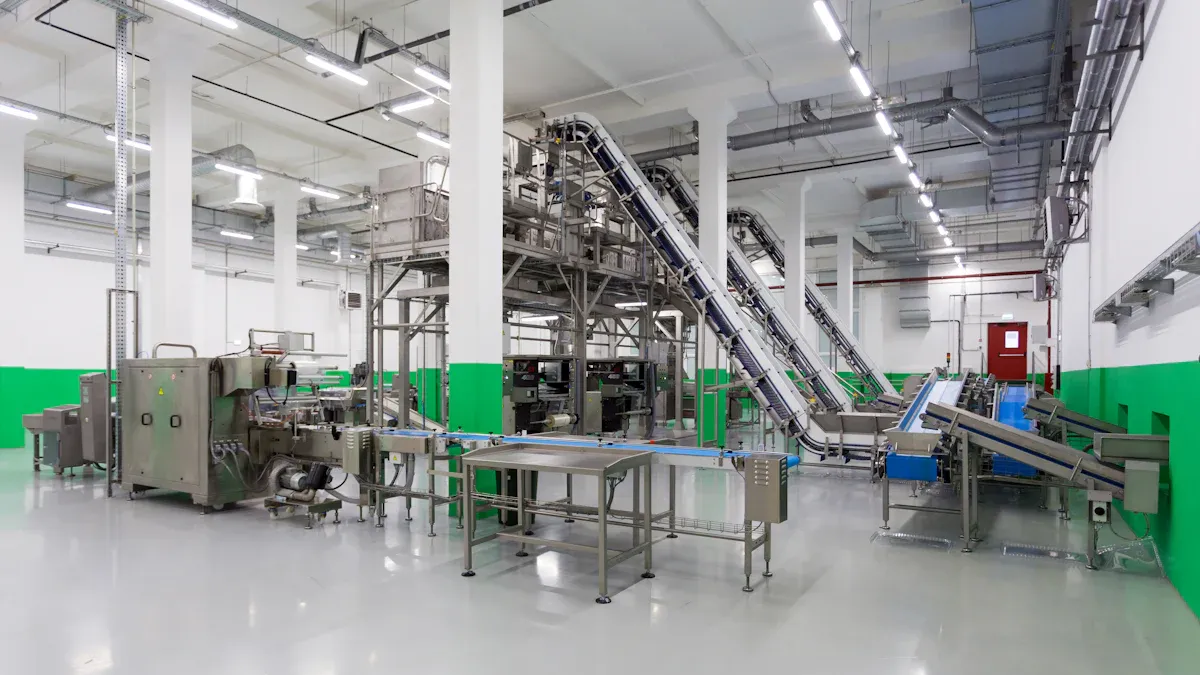
I help you identify the top custom roto mold factory for 2025. I show what distinguishes leading manufacturers. You can then leverage insights into their capabilities and services. This empowers you to make informed decisions for your project. Selecting the right custom roto mold factary is key.
Key Takeaways
- Custom rotomolding makes strong, hollow Plastic Parts. It works well formany products, from small items to large tanks.
- Choosing the right factory means looking at their skills, quality, and design help. This ensures your project succeeds.
- New technology and green methods make rotomolding better. They help create custom products and protect the environment.
Understanding the Custom Rotational Molding Process
The Fundamentals of Rotomolding Explained
I find the rotational molding process fascinating. It creates hollow plastic parts. First, we prepare the mold. We fill the hollow mold with polymer powder or resin. Then, we apply a mold release agent. The mold gets preheated before loading the powder. After that, we close the mold and move it to an oven. Next, we heat the mold. It rotates on two axes. This rotation happens at speeds below 20 rotations per minute. This ensures the material spreads evenly. It also creates a consistent wall thickness. Proper timing is very important here. It prevents the polymer from degrading or not melting enough. After heating, we cool the mold. We use air or water for cooling. We control the cooling rate carefully. This prevents problems like shrinkage or warping. Finally, we unload the mold. We carefully remove the finished product. This step needs attention to mold design. Proper mold release helps for easy removal. This ensures high-quality parts.
Key Advantages of Custom Rotomolded Products
Custom rotomolding offers many benefits. I see its design flexibility as a major plus. It handles large, complex shapes well. It also manages intricate details. Other methods might find these challenging or expensive. We can make items of various shapes and sizes. These range from small industrial parts to large tanks. Cost efficiency is another advantage. It works well for low to medium production volumes. This is because tooling costs are low. We can build and repair molds in-house. This ensures reliable production without big extra costs. Rotomolded products are also durable and strong. They have reinforced walls. These can handle extreme temperatures and tough environments. This makes them great for bins, storage, and barriers. We can use many plastic materials. These include LLDPE, HDPE, and Nylon. Each material offers specific benefits. For example, some resist UV light or chemicals. This process is also eco-friendly. It creates very little waste. We can often reuse excess material. This supports sustainable production goals.
Diverse Applications of Rotational Molding
Rotational Molding hasmany uses. I see it everywhere. In recreation and transportation, we make plastic boats. We also create watercraft for ice rescues. Oversized light-up swings are another example. Plastic shopping cart accessories also use this method. For gardening and lighting, we produce plastic housings. These go into lawn and garden equipment. We also make rotomolded lighting housings for architectural designs. In industrial settings, we create recycling units. Blower housings and water filtration systems also use rotomolding. We make many types of containers. These include refrigerated boxes, drums, and shipping containers. Tanks are a big application. We produce fuel tanks, septic tanks, and water treatment tanks. Some shipping tanks hold up to 50,000 liters. These carry water, chemicals, or sewage. In the medical field, we make stretchers. We also create casings for medical samples. Facial oxygen masks and paramedic cases are also rotomolded. The marine industry uses it for floats and buoys. Dock floats and pool liners are also common. Recreational watercraft like pontoons and kayaks are made this way.
Top Custom Roto Mold Factory Leaders for 2025
I have looked at many companies. I want to share some top custom roto mold factory leaders for 2025. These companies stand out for different reasons. They show great skill and service in rotational molding.
Integrity Rotational Molding: Innovation and Growth
I see Integrity Rotational Molding as a leader in innovation. They constantly look for new ways to improve. They focus on growing their capabilities. This helps them meet new market demands. They work hard to offer advanced solutions. Their commitment to progress makes them a strong choice.
Roto Dynamics: Expertise in Specialized Applications
Roto Dynamics truly excels in specialized applications. I have seen their work with high-quality plastic tanks. They make water storage tanks and septic tanks. They also produce oil tanks and chemical storage containers. Their expertise extends to rotomolded battery boxes. This shows their skill in specific, important areas.
Sherman Roto Tank LLC: Focus on Large-Scale Solutions
Sherman Roto Tank LLC focuses on large-scale solutions. I know they provide custom rotational molding. They also offer design, manufacturing, and metal fabrication services. They serve big industries like Oil & Gas, Chemical, Agricultural, and Marine. I find their product lines impressive. For example, their Versa Kit™ helps install accessories safely. This improves efficiency and safety in chemical handling. Their General Use Philosophy® uses inert components. This extends equipment life and ensures safety in chemical storage. They also have Barrier Enhanced Tanks™. These tanks keep chemical products safe and reduce risks. Their Product Integrity Kits™ create a closed environment for chemical storage. This reduces potential hazards. They developed special tanks for agriculture. These tanks make water storage more efficient. They also created custom containers for the chemical industry. These ensure safety and meet rules.
Sungplastic: Advanced Materials and Global Reach
Sungplastic impresses me with its use of advanced materials. They work with many types of plastics. I know they use ABS, PP, PE, and PMMA. They also use PA, PS, PC, PEEK, PVC, and PET. They even use engineering-grade plastics, thermoplastics, modified plastics, and composites. This wide range of materials allows them to create diverse products. Their global reach means they can serve customers worldwide.
Western Industries Plastic Products, LLC: Diverse Product Offerings
Western Industries Plastic Products, LLC offers many different products and services. I see they do custom blow molding. They make finished parts from less than a pound to over 40 pounds. They can handle large production runs. They also manage parts with many components. They offer design assistance for complex plastic projects. Their process engineering team creates safe and economical solutions. They use Quality Management Systems (QMS). This ensures high quality standards. They provide expert packaging services, including kitting. They have strong supply chain management. They also offer Third-Party Logistics (3PL) for logistics management. Their purchasing professionals help customers. They also offer many value-add services. These services make products even better.
Custom Roto-Mold LLC: Established Quality and Service
Custom Roto-Mold LLC shows a strong commitment to quality. I know they are ISO 9001:2008 Certified. They also hold ISO 9001:2015 certification. This ensures great quality and happy customers. They specialize in rotational molding for small to large parts. They offer value-added assemblies. They also provide logistics and warehouse support. I appreciate their design guidance. They have expertise in engineering and custom manufacturing. They focus on quality and precision. This ensures products are durable and work well. They are committed to customization and innovation.
Innovative Rotational Molding: High-Quality Product Manufacturing
Innovative Rotational Molding focuses on high-quality product manufacturing. I see them striving for excellence in every piece. They use careful processes. They ensure their products meet strict standards. Their dedication to quality makes them a reliable partner.
Key Criteria for Selecting a Custom Roto Mold Factory Partner
Choosing the right partner for your rotational molding needs is a big decision. I look for several key criteria. These help me find a factory that truly meets project demands.
Assessing Manufacturer Capabilities and Capacity
When I assess a manufacturer, I first look at their capabilities. I want to know if they can produce high-quality, durable plastic products. This includes hollow, seamless, and double-walled items. I also check for their component assembly services. Can they do post-forming assembly? This means drilling, cutting, and attaching hardware. I also examine their CNC trimming services. Sophisticated CNC robotic trimming ensures precise cuts. This is especially important for intricate shapes. Some even use fully automated dual-head rotobotic trim cells.
I also evaluate their design and engineering consulting. Do they have in-house experts? These experts should help with concept development and material selection. They should also do engineering analysis and optimization. They use advanced software tools for this. I also look for 3D printing prototype services. This allows for fast design changes and tangible models. Material sourcing is another key area. I check their process for getting raw materials. These materials must meet quality, cost, and industry standards. Finally, I look for rigorous quality assurance processes. This includes ISO Certification and experience as a Tier 1 supplier. A fully equipped quality lab for testing is also important.
I also consider their machine specifications. What type and size of rotational molding machines do they have? For example, a Rotoline 2.6 is a mid-size machine. It has three independent carousel arms. This works well for small to mid-size products. I also assess their engineering team. Can they design innovative products? Or can they manufacture based on my designs? They must use high-quality plastics. Mold maintenance is also vital. I look for in-house preventative maintenance and tool repair services. This keeps molds ready and efficient. I examine their finishing technologies for accuracy and consistency. I also check if they offer complete assembly and packaging.
Warehousing and distribution are important too. I evaluate their manufacturing and warehousing space. Some have nearly 200,000 square feet. Can they fulfill product storage and distribution needs? I also ask about drop shipping. Can they ship products directly to customers? This can be single units or large retail shipments. Their quality assurance team should identify customer requirements. They should also look for continuous improvement. I consider the product size range they can handle. This can be from a small ping pong ball to a large 20,000-gallon tank. I also look for design flexibility. Can they handle complex shapes, moving sections, and uniform wall thickness? I also check for mold-in graphics. This includes logos, serial numbers, and bar codes. I ask about color selections. Can they match Pantone colors? Do they offer special colors like granite and sandstone? I also evaluate their ability to add metal or threaded inserts during molding. Finally, I check for various surface finishes. This can range from high gloss to detailed textures.
Evaluating Quality Standards and Certifications
Quality is paramount. I always evaluate a custom roto mold factory's quality standards. Certifications show a commitment to quality. I look for several key industry certifications.
- CSA (Canadian Standards Association): This is important for flammability and electrical safety.
- FDA (U.S. Food and Drug Administration): This applies to materials used in food processing, pharmaceutical, and medical equipment.
- NSF (NSF International): This certifies materials for use with drinking water systems and swimming pool chlorinators. I look for NSF 61 certified materials.
- UL (Underwriters Laboratories): This covers flammability and electrical safety. UL 94 materials are important for flame resistance.
Material certification from suppliers is also crucial. This certification gives detailed information about the resin's properties. It includes chemical composition, melt flow rate, density, and shelf life. I verify that the material meets my specific requirements. I also check that it meets industry standards. I make sure the certification is current. It must apply to the specific batch of material they use.
Importance of Design and Engineering Support
Strong design and engineering support is a game-changer. I find that leading custom roto mold factories offer extensive help. Companies like EPI Roto have experienced teams. They help both new and existing customers. They ensure products are designed specifically for rotomolding. They act as an extension of my team. They work directly to understand my needs. Then they create innovative solutions. These teams often have over 100 years of collective experience. Their backgrounds span chemistry, rotational molding, and product design. They also help convert products from other manufacturing processes. This includes fiberglass, sheet metal, or wood. They recommend the best materials. These include high-density polyethylene (HDPE), linear low-density polyethylene (LLDPE), cross-linked polyethylene, nylons, and polypropylene.
Fibertech Plastics provides comprehensive design and manufacturing services. Their team works closely with clients. They design products using SolidWorks. They offer CAD-enhanced material and product specifications. They also give wall thickness recommendations and mold configurations. They oversee mold construction. They can produce large-scale rotomolded parts. Their in-house design and development services aim for quick project turnaround. They use years of experience. This helps them identify and fix design or manufacturing problems early. They do this before tooling is complete. This saves time and speeds up market entry. They can take a rough concept. Then they develop complete engineering drawings and custom molds.
Centro, another leader, offers many design and engineering support services. I see they help with:
- Conversion to Plastic
- Engineering Services
- Design Assistance
- Finite Element Analysis
- Industrial Design
- Quality Planning
- Materials expertise
Their in-house design and engineering teams manage projects. They go from concept to production. They boast over 150 years of collective experience. They also help with early product concept creation. They do this by working with client engineering and marketing groups.
Understanding Material Expertise and Selection
Selecting the right material is critical. It helps achieve the desired performance characteristics. I look for factories with deep material expertise. CPI Products offers a wide range of materials. They guide clients in choosing the correct polymer. For example, high-density polyethylene (HDPE) offers strength, impact, UV, and chemical resistance. Linear low-density polyethylene (LLDPE) provides flexibility and stress crack resistance. Material selection depends on specific requirements. This includes weatherability, impact resistance, or food-safe qualities.
Integrity Rotational Molding offers a full range of rotomolding grade resins. They also provide specialty materials for demanding applications. Custom color matching and additives are available too. Roto Dynamics emphasizes the importance of material choices. They feature 'Resin Options' as a quick link on their custom rotomolding guide. This shows that material selection is a key consideration for clients.
Logistics, Supply Chain, and Geographic Considerations
Logistics and supply chain management are vital. I assess a factory's warehousing space. I also check their distribution capabilities. Can they handle drop shipping? This means shipping products directly to customers. It can be single units or large retail shipments. I also consider their overall supply chain. How do they manage raw materials? How do they handle production flow and delivery?
Geographic location also plays a role. I consider the factory's proximity to my operations. This impacts shipping costs and lead times. Regional support can also be beneficial. A nearby factory can offer quicker responses and easier communication.
The Role of Technology in a Modern Custom Roto Mold Factory
Automation and Advanced Manufacturing Techniques
I see technology transforming the rotational molding industry. Automation plays a big role. Modern factories use advanced manufacturing techniques. These include robotic arms for material handling. They also use automated cooling systems. This improves efficiency and consistency. I find these advancements lead to more precise products. They also reduce human error. This helps a custom roto mold factory deliver high-quality results.
Sustainable Practices and Eco-Friendly Materials
I believe sustainability is very important. Rotational molding is naturally sustainable. It creates durable goods with less waste. The process uses lower pressures and temperatures. This saves energy compared to other plastic methods. Factories can recycle and reuse waste material. This aligns with sustainable goals. I see material innovations happening. Companies research bioplastics and recycled polymers. These reduce reliance on fossil fuels. They offer comparable strength. Energy-efficient processes are also key. Factories optimize heating cycles. They use advanced insulation. They invest in energy-saving machinery. Waste reduction strategies are also in place. They optimize mold designs to minimize excess material. They implement recycling programs for scrap plastic. They also use advanced monitoring systems. I know they design products for easy disassembly and recycling. This is a cradle-to-cradle approach. For example, reprocessed polyethylene shows good strength. They also grind off-cuts and manufacturing scrap. They reintroduce these into the polymer. Post-consumer waste and regrind from defective parts are also used.
Customization and Mass Personalization Trends
Growth and Market Dynamics in Custom Rotational Molding
Industry Growth Projections for 2025 and Beyond
I see a bright future for custom rotational molding. This industry continues to grow. Experts predict steady expansion for 2025 and beyond. I believe this growth comes from many new uses for rotomolded products. Companies find new ways to use this process. They value its unique benefits.
Factors Driving Demand for Custom Rotomolded Parts
I observe several factors driving demand for custom rotomolded parts.
- They make parts with high-quality finishes. These parts have even wall thickness and great stability.
- The process is cost-effective. Molds are inexpensive. It works well for small production runs.
- The automotive sector needs versatile and cheap molding. It needs parts for many shapes and sizes.
- Medical supplies must be clean. They need custom-designed equipment.
- People want lightweight, strong plastic parts. This is true for cars, planes, and consumer goods.
- Governments invest in building things worldwide. This boosts demand for items like trash cans, road cones, and traffic dividers.
- Technology improves. Computer systems and automation make production more accurate and efficient.
- More industries use these parts. This includes farming, building, and healthcare.
- New materials come out. They are lightweight, strong, and can break down naturally.
Emerging Markets and Niche Opportunities
I also notice new places and chances for this industry.
- E-commerce packaging is growing.
- Companies use more recycled materials.
- The industry expands into new areas like healthcare and marine.
I see specific regions showing strong growth.
- Asia-Pacific will likely lead the market. Countries like China, India, and Japan drive this.
- Latin America uses more rotational molding. Mexico and Brazil are key.
- The Middle East and Africa grow. Turkey and the UAE show industrial progress.
- North America, led by the U.S. and Canada, has strong factories.
- Europe, with Germany, France, and the U.K., focuses on green practices. This helps the market.
I also see other opportunities.
- People prefer eco-friendly products. Rotational molding uses recyclable materials.
- Customers want special, custom products. This boosts rotational molding in many industries.
- New molding technology improves product quality. It expands what we can do.
- We can create new designs. We can add smart technology to molded products.
I found choosing the ideal custom roto mold factory involves assessing capabilities, quality, and engineering support. Strategic planning and careful material selection ensure successful project outcomes. I believe strong manufacturing partnerships offer enduring value for future growth.
FAQ
What is the main benefit of custom rotomolding?
I find custom rotomolding offers great design flexibility. It creates large, complex, hollow plastic parts efficiently.
Why is material selection important in rotomolding?
I know material selection is crucial. It ensures the product has the right strength, UV resistance, or food-safe qualities for its intended use.
How does technology help modern rotomold factories?
I see technology, like automation, improves efficiency. It also makes products more precise. This helps factories deliver high-quality results.