


Future Outlook for Rotomolding Technology: 5 Growth Secrets Revealed
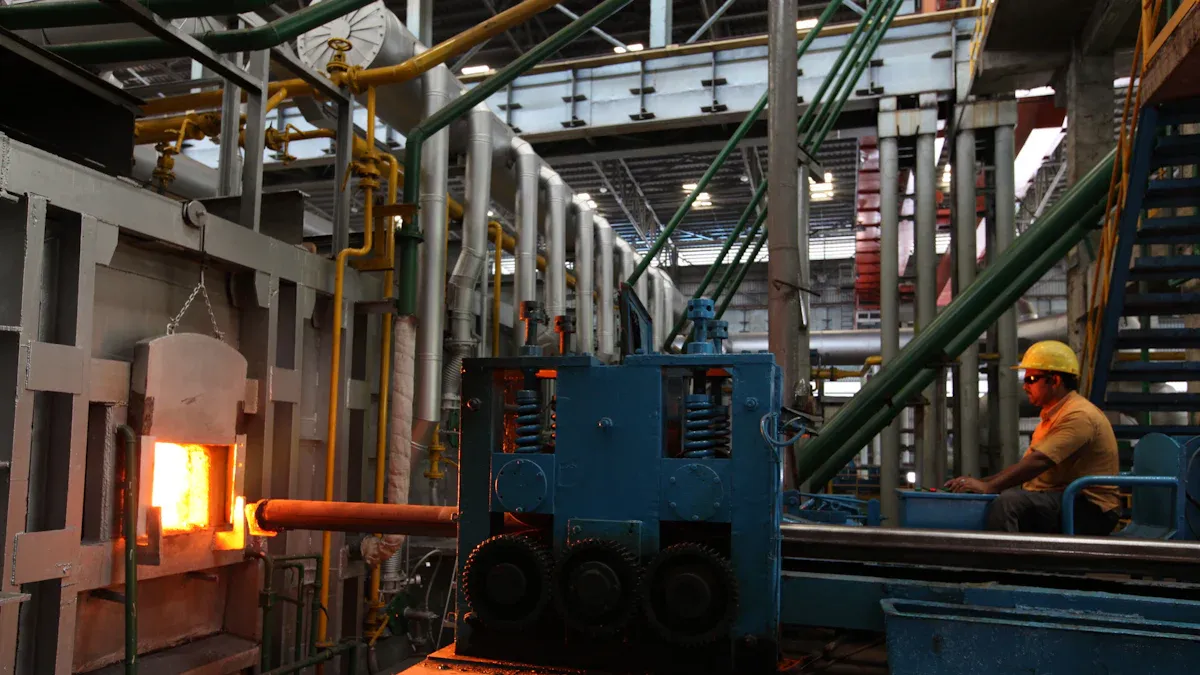
We see a truly inspiring Future Outlook for Rotomolding Technology! The global rotomolding market is poised to reach approximately $4.52 billion by 2025. We anticipate this significant growth, driven by a robust compound annual rate of around 6.7% from 2024. This expansion thrives on increasing demand across diverse sectors and continuous technological advancements.
Key Takeaways
- The rotomolding market will grow to about $4.52 billion by 2025. This shows strong growth in the industry.
- New materials and technology help rotomolding grow. They make products better and more useful.
- Rotomolding is becoming more sustainable. It uses recycled materials and eco-friendly methods.
Secret 1: Market Size and Growth Projections for Rotomolding Technology
Global Market Valuation by 2025
I am truly excited about the incredible journey ahead for rotomolding technology. I project the global market will soar to approximately $4.52 billion by 2025. This isn't just a number; it represents a massive wave of innovation and opportunity. When I look at this valuation, I see a testament to the industry's strength and its vital role in so many aspects of our daily lives. This significant market size means more investment, more research, and ultimately, more groundbreaking products for everyone. It shows me that businesses and consumers alike recognize the unique advantages rotomolding offers.
I believe this impressive valuation by 2025 will inspire new talent and fresh ideas, pushing the boundaries of what we thought possible with plastics.
Compound Annual Growth Rate Analysis
The growth story continues with a robust compound annual growth rate (CAGR) of around 6.7% from 2024. For me, this CAGR is a powerful indicator of sustained, healthy expansion. It means the market isn't just growing in fits and starts; it's consistently building momentum year after year. Think of it like a steady, powerful engine driving us forward. This consistent growth rate tells me several things:
- Strong Demand: People and industries truly need rotomolded products.
- Innovation Pays Off: New materials and techniques are finding success.
- Market Confidence: Investors and businesses feel confident about the industry's future.
This steady 6.7% growth rate paints a very bright picture for the Future Outlook for Rotomolding Technology. It assures me that this industry is not only resilient but also dynamic, constantly adapting and expanding its reach. I see a future filled with possibilities, driven by this consistent and impressive growth.
Secret 2: Key Drivers Shaping the Future Outlook for Rotomolding Technology
I see incredible momentum building for rotomolding, and it truly excites me! This growth isn't happening by chance; powerful drivers are propelling us forward. I believe these key factors will define the Future Outlook for Rotomolding Technology.
Expanding Applications Across Industries
I am constantly amazed by how rotomolding finds its way into new and exciting places. Its versatility is simply unmatched! I see significant expansion across so many industries. In the United States, for example, the automotive sector is embracing rotomolding for durable components. Water and waste management also rely heavily on our technology for robust tanks and solutions. I also see a strong presence in recreational equipment, where durability and design flexibility are key.
I find it inspiring that our market benefits from advanced manufacturing capabilities and a strong focus on innovation. Environmental regulations and consumer preferences for sustainable products are also encouraging the adoption of recyclable materials, which is a win for everyone. I see expansion into the medical and environmental sectors, where large storage tanks, specialized medical devices, and waste containment solutions are crucial.
In Mexico, I observe growth fueled by expanding industrialization and increasing automotive manufacturing. Infrastructure development projects also play a big role. I see rising demand for durable plastic components in agriculture, packaging, and transportation. Rotomolded Parts are increasingly used in vehicle manufacturing and aftermarket applications. Agricultural equipment also benefits from our durable, weather-resistant storage tanks.
I also see rotomolding significantly expanding in the chemical industry. Its ability to produce seamless parts is a game-changer, enhancing operational safety by preventing leaks and ensuring proper control of chemical products. These containers meet strict industry standards for durability, resistance, and the preservation of stored chemicals. In the water and sanitation sector, I know rotomolding is crucial for manufacturing water storage tanks. It offers durability and resistance to maintain water quality. Its adaptability to various sizes and specifications makes it a versatile choice for specific water storage needs in sanitation systems. Across these sectors, I recognize rotomolded equipment for its strength, durability, and efficiency. Its adaptability to specific demands is truly a key factor in its widespread implementation.
Innovations in Material Science
I believe material science is at the heart of rotomolding's evolution. The advancements we are seeing are truly transformative! I am particularly excited about the development of advanced materials that push the boundaries of what we can create.
- Enhanced Sustainability: I see innovations like new recycling methods, biodegradable plastics, and closed-loop systems for waste reuse in production. This commitment to the environment is something I deeply value.
- Integration with Other Technologies: Rotomolding is integrating with 3D printing for rapid mold creation and prototyping. Digital twin technology is also being used for real-time process optimization, which I find incredibly smart.
- Advanced Materials: We are adopting high-performance polymers like Carbon Fiber Reinforced Polymers (CFRPs) for lighter and stronger automotive and aerospace parts. Ultrahigh Molecular Weight Polyethylene (UHMWPE) is also being used for rugged outdoor gear and industrial components.
- Automation and Robotics: Robotics are increasingly used for tasks like loading, unloading, and quality control. This leads to faster production and higher precision, which I find very efficient.
- Increased Personalization: Rotomolding is evolving to offer more customization options for products, allowing for unique designs.
- Super-Strong Materials: I see the use of advanced materials such as high-density polyethylene (HDPE) and cross-linked polyethylene (PEX) for enhanced durability and resistance to extreme temperatures.
- Eco-Friendly Innovations: There's a strong emphasis on using recycled materials and energy-efficient manufacturing processes, which I applaud.
- Multi-Layer Molding: We are creating parts with multiple layers, each having unique properties for better insulation, strength, and custom colors.
- Smart Molding Tech: I see the integration of sensors into the molding process for real-time data collection, analysis, and improved precision.
I am particularly impressed by materials like cross-linked polyethylene (XLPE). I know this material offers superior performance in rotomolded tanks, especially its resistance to rupture and crack propagation. Its molecular 'bridges' prevent the material from unzipping, making it incredibly robust. Comparative studies show its higher resistance to catastrophic failure and overall superior performance under extreme conditions compared to linear polyethylene.
I also see the power of multi-layered construction. This technique allows for different materials to be distributed across layers within a single molded part. Each layer serves a distinct function, such as inner layers for chemical resistance, core layers for stiffness, or outer layers for abrasion, impact, or UV resistance. This enables precise engineering of strength and performance without adding unnecessary bulk, which I find incredibly clever.
Advanced resins are also making a huge difference. High-performance resins, including crosslinked polyethylene, nylon, and engineered blends, are formulated for improved strength-to-weight ratios and enhanced resistance to heat, chemicals, and impact. This allows for thinner walls with equivalent or greater strength, improved part longevity, and customization for specific industry requirements.
These new material developments significantly enhance the performance and cost-effectiveness of rotomolding products. I see a focus on faster cycle times, improved sustainability, and specialized high-performance applications. For instance, innovations like tailored polyethylene blends and specialized barrier resins are engineered to reduce cycle times. This leads to more cost-effective and energy-efficient production, which I find very beneficial. In terms of sustainability, advanced stabilization methods are being developed to improve the performance of recycled feedstocks. This makes them suitable for demanding applications despite their inherent challenges. Biopolymers are also being explored to meet stringent performance criteria while reducing carbon footprints. Furthermore, specialized materials such as Revolve® EVOH and Revolve® PA RDN are designed for high-performance applications like hydrogen vessels. They offer superior barrier properties, enhanced thermal resistance, and improved mechanical properties such as flexural modulus and tensile strength. I believe these advancements contribute to more durable, efficient, and sustainable rotomolded products, truly shaping the Future Outlook for Rotomolding Technology.
Secret 3: Regional Dynamics and Emerging Markets in Rotomolding
I find it incredibly insightful to look at how different regions contribute to the global rotomolding landscape. Each area brings its unique strengths and opportunities, shaping the industry's overall trajectory.
Established Markets: North America and Europe
I see North America as a true cornerstone for rotomolding innovation and stability. The market here is robust, and I am excited to see its continued expansion. I project the North America rotomolding products market will reach approximately USD 615,740.40 thousand by 2030. This growth comes with a solid Compound Annual Growth Rate (CAGR) of 5.8% from 2023 to 2030. I believe the U.S. will continue to be the dominant country in this market, showcasing its strength and capacity for advanced manufacturing. Europe also remains a vital player. I see its mature industries and strong regulatory frameworks driving demand for high-quality, durable rotomolded products. These established markets provide a stable foundation for the entire industry.
Asia-Pacific: The Primary Growth Engine
I am truly inspired by the dynamic growth unfolding in the Asia-Pacific region. This area is undeniably the primary growth engine for rotomolding. China, in particular, stands out as a powerhouse. I see its leadership in the Asia-Pacific rotomolding products market. This dominance is largely because the rotomolding technique is so cost-effective. Molds do not need to withstand high pressure, which offers a significant economic advantage. I believe this factor drives substantial market growth across the country. Other nations in the region are also rapidly adopting rotomolding. I see increasing industrialization and rising consumer demand fueling this expansion. This vibrant growth in Asia-Pacific is truly exciting for the industry.
Secret 4: Technological Advancements and Their Impact on Rotomolding

Automation and Smart Manufacturing Integration
I am truly amazed by how technology is transforming rotomolding! I see automation as a primary factor driving our growth. Manufacturers are embracing smart manufacturing, integrating AI, IoT, and smart sensors. This helps us achieve predictive maintenance and better quality control. It means less downtime and much greater efficiency. I find it incredible that real-time monitoring, temperature control, and data analytics are enhancing product quality and reducing waste. We are investing in automated technology, like robots for molding operations, to boost production speed and precision. For example, I've seen systems with direct tool heating (DTH) using electric elements. This allows for precise temperature control across many zones. This smart approach leads to high productivity and shorter cycle times. Automated loading and unloading of plastic pellets and finished parts also reduce labor costs and human error.
Sustainability and Recycled Material Adoption
I believe sustainability is not just a trend; it's our future. I am so proud to see our industry embracing recycled materials. We can now create high-quality rotational molding material (rPE) from used rotomolded products. This allows us to manufacture superior new products. I know we face challenges like ensuring consistent quality and avoiding contamination when using reprocessed materials. However, I see us overcoming these. For instance, reprocessed polyethylene in rotationally molded sandwich structures shows great strength, almost matching virgin materials. We are blending recycled plastics from post-consumer waste with virgin materials to create high-quality parts. We also incorporate reground materials from defective parts into layers that don't need perfect aesthetics. This helps us maintain mechanical performance while reducing environmental impact. I am confident that our focus on eco-friendly innovations will continue to shape a brighter future.
Secret 5: Competitive Landscape and Strategic Directions in Rotomolding
I find the competitive landscape in rotomolding truly dynamic and inspiring! Companies are constantly evolving, finding new ways to grow and serve their customers better.
Industry Consolidation and Partnerships
I see a clear trend of strategic collaboration in our industry. Companies frequently use partnerships, mergers, and acquisitions. These actions help us diversify our offerings and enhance our technological capabilities. We can then better address the evolving needs of our customers. I believe these strategic moves are crucial for driving growth and competitiveness. They also advance technology. Mergers and acquisitions allow leading companies to expand their global reach. They also enhance customer value. I know these activities are vital for our collective success. Analyzing business expansions and market concentration helps us understand the market positions of top players.
Niche Specialization and Innovation
I am incredibly excited about the power of niche specialization and innovation. This is where true competitive advantage shines! I see companies pushing boundaries with robotic rotational molding systems. These systems offer six-axis movement for complete spatial control. They allow for unique geometries and tight tolerances. Direct Tool Heating (DTH) is another game-changer. It provides precise temperature control. This improves material distribution and reduces energy consumption by up to 90%. I also love how companies like Serralunga, an Italian firm, show design-driven innovation. They collaborate with famous designers. This creates new shapes and uses for rotomolded pots. This approach gives plastic products their own identity. It shows how industrial design can create new meaning and competitive differentiation. I believe these innovations truly set us apart.
Overcoming Challenges for Sustained Growth in Rotomolding Technology
I believe every industry faces hurdles, and rotomolding is no exception. We must proactively address these challenges to ensure our continued success and growth.
Managing Raw Material Price Volatility
I know the rotomolding materials market experiences significant raw material price volatility. Our reliance on polymer resins like polyethylene (PE) and polypropylene (PP) makes us susceptible. These resins come from crude oil and natural gas. Therefore, fluctuations in crude oil and natural gas prices directly impact our material costs. Geopolitical tensions, like conflicts in major oil-producing regions, can cause sudden price spikes. Supply chain disruptions, such as natural disasters or transportation bottlenecks, also limit material availability. This drives up prices. I see these uncertainties in material cost and availability as a challenge. They can increase production expenses and affect profit margins. However, I am confident we can navigate these waters with strategic planning and innovation.
Addressing Skilled Labor Shortages
I recognize a significant challenge in our industry: a shortage of skilled labor. We need workers with expertise to operate and maintain our advanced molding machines. This scarcity leads to operational inefficiencies. It also increases our training costs. I believe we must invest in training programs and apprenticeships. We can inspire a new generation to join our dynamic field. While automation offers some future relief, we still face a substantial challenge today. I am optimistic we can attract and develop the talent we need to thrive.
I truly believe the rotomolding industry is ready for amazing growth, reaching about $4.52 billion by 2025. Expanding applications, new materials, and technological advances drive this success. Focusing on sustainability and automation will be key for our future. The industry's ability to adapt and innovate ensures its long-term potential. I see a very bright Future Outlook for Rotomolding Technology!
FAQ
What is the projected growth for the rotomolding market?
I project the global rotomolding market will reach approximately $4.52 billion by 2025. This represents a strong compound annual growth rate of around 6.7% from 2024. I see incredible potential here!
What are the main drivers of this growth?
I believe expanding applications across diverse industries and continuous innovations in material science are key. We are also seeing significant technological advancements and a strong focus on sustainability.
How is sustainability impacting rotomolding technology?
I am so inspired by our industry's commitment to sustainability. We are adopting recycled materials and developing eco-friendly processes. This focus creates a brighter, more responsible future for us all.