


Where is China's Rotational Molding Die Industry Heading?
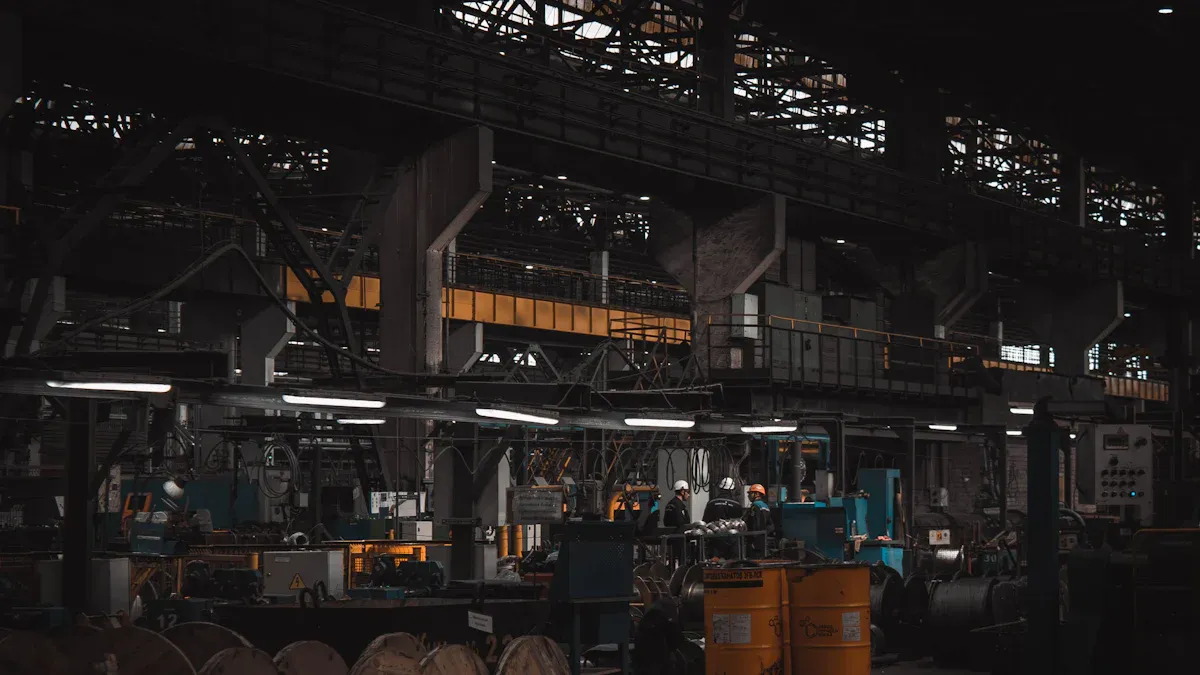
China's Rotational Molding die industry shows significant progress. It moves towards advanced technology. The industry diversifies its market reach. It also builds a stronger global presence. Evolving manufacturing needs drive this growth. Strategic national plans further support its development.
Key Takeaways
- China's rotational molding industry is growing. It uses new technology and smart factories. This makes products better and faster.
- The industry is making many different products. It serves new areas like cars and healthcare. It also focuses on custom solutions.
- China's industry wants to be green. It uses recycled materials. It also makes products in ways that help the environment.
Current Landscape of China's Rotational Molding Die Industry
Historical Development and Growth
China's Rotational Molding industry began in the 1960s. It first produced toys and later polyethylene and nylon containers. By 1992, many production plants existed. However, most used technology from the 1950s and 1960s Western standards. Key technological limits prevented major breakthroughs. This led to products without strict size or performance needs. China's rotomolding industry started late. Many companies lacked deep plastic technology knowledge. This created a significant gap compared to developed countries. However, gradual development in rolling machine and plastic mold manufacturing now occurs. Plastic material varieties also increase. International communication grows.
Key Players and Market Dynamics
The market sees a growing number of players. Competition increases as companies strive for advanced solutions. This dynamic pushes for continuous improvement and innovation within the industry. Companies focus on efficiency and quality to gain market share.
Current Technological Capabilities in Rotational Molding
Today, companies like Maxtech-China use the latest rotomolding technology, tooling, and equipment. They provide custom solutions. Their material choices include HDPE and LLDPE. They perform foaming filling inside products. They incorporate metal inserts. High-precision threaded molding is possible. They also produce double-layered products with two colors. China Rotomould employs the latest technology for mold design. They offer multiple mold-making options. They advise on suitable mold types and plastic materials. Technological advancements include custom color mixing, program standardization, and automatic cutting technology. They use hot air cycle, closed, and energy-saving ovens.
Domestic Market Demand and Applications
Domestic market demand grows for diverse applications. Industries seek customized solutions. This drives the need for advanced manufacturing capabilities. The industry now serves more complex product requirements beyond simple containers. This includes automotive parts, agricultural equipment, and industrial components.
Driving Forces and Challenges for Rotational Molding Dies
Technological Innovation and R&D
Technological innovation drives the rotational molding die industry forward. Companies invest in research and development (R&D) to create better molds. They aim for higher precision and more complex designs. New materials and manufacturing processes emerge from this effort. These innovations allow for lighter, stronger, and more durable products. Continuous R&D helps China's industry stay competitive globally.
Government Policies and Support
Government policies and subsidies play a crucial role. They encourage modernization within the die and mold products market. This includes rotational molding dies. These policies also promote export-oriented growth strategies. Such supportive measures are key drivers for market growth. The government helps companies upgrade their technology and expand their reach.
Global Market Competition
Global market competition presents both opportunities and challenges. Chinese Mold Manufacturers benefit from lower production costs. This is due to a large population and affordable labor resources. This leads to strong price competitiveness. Years of development and technological accumulation provide Chinese manufacturers with rich experience. They also have technical reserves. This enables them to produce high-quality mold products.
Chinese manufacturers often possess extensive production equipment and a large workforce. This allows for quick responses to customer needs. They also offer shorter lead times. They employ efficient production processes and manufacturing technologies. This helps them produce large quantities of mold products while maintaining quality. They offer a wide range of production equipment and technologies. This enables them to manufacture various types of mold products. These products meet diverse customer requirements. Many Chinese mold makers meet international compliance standards. These include ISO9001, IATF 16949, and RoHS. This makes them reliable global suppliers.
| Feature | Chinese Manufacturers (e.g., Inborn) | International Competitors (e.g., Manufacturer A, B) |
|---|---|---|
| Cost | Lower production costs due to strategic location for material sourcing, efficient manufacturing processes, and volume discounts. Offers superior cost performance and value. | Manufacturer A: Premium pricing for niche markets. Manufacturer B: Mid-range pricing. |
| Quality | High-quality standards, commitment to R&D, innovative design, and long-term durability. | Manufacturer A: High quality. Manufacturer B: Quality not explicitly detailed but implied to be balanced with mid-range pricing. |
| Customization | Comprehensive customization services (OEM/ODM) without excessive costs, tailored solutions. | Manufacturer A: Not specified. Manufacturer B: Limited customization options. |
| Efficiency | Advanced manufacturing techniques, state-of-the-art machinery, optimized production, reduced waste, enhanced productivity. | Less optimized manufacturers. |
| Supply Chain | Strategic location in China, well-established logistics network, timely delivery, reduced shipping costs. | Not explicitly detailed for competitors. |
Environmental Regulations and Sustainability Pressures
Environmental regulations are becoming stricter. This puts pressure on manufacturers to adopt sustainable practices. Companies must reduce waste and energy consumption. They need to use eco-friendly materials. This shift requires new technologies and processes. It also creates opportunities for green innovation.
Skilled Labor and Talent Gap
A skilled labor and talent gap poses a significant challenge. The industry needs engineers, designers, and technicians. These professionals require specialized knowledge in rotational molding. Training programs and educational initiatives are essential. They help bridge this gap. Attracting young talent to the industry is also important for future growth.
Future Prospects for China's Rotational Molding Industry
Technological Upgrades and Automation
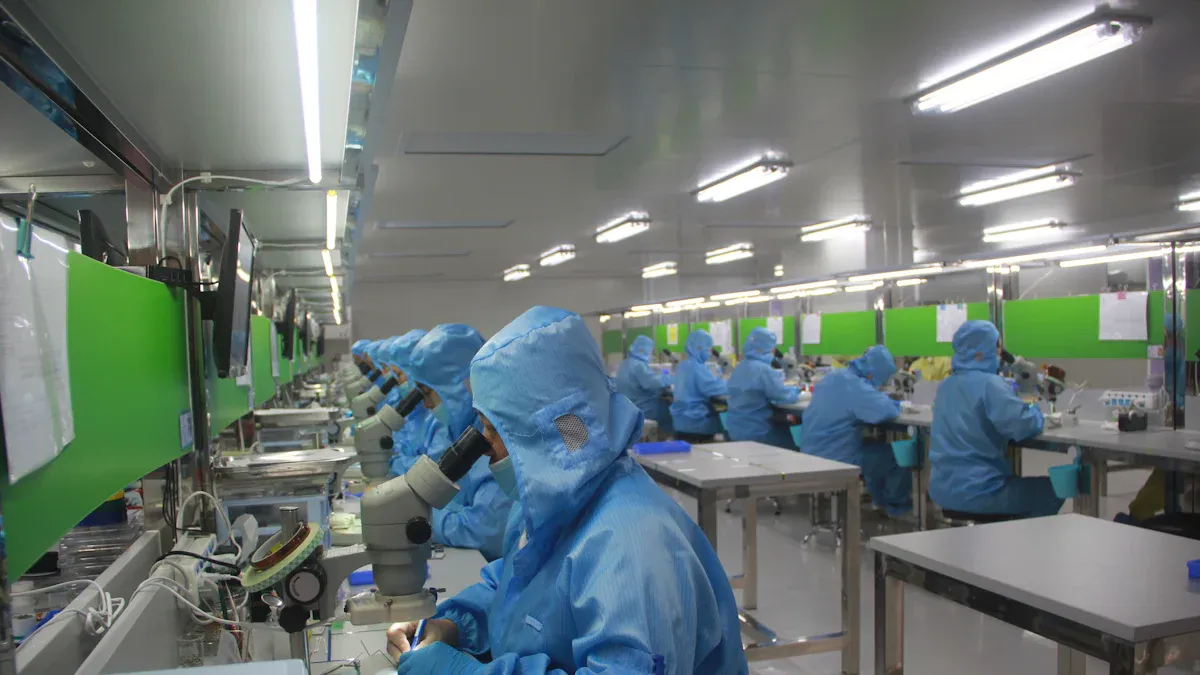
China's rotational molding industry is moving towards advanced technology and automation. Manufacturers are adopting smart factory concepts. They use sensors and IoT-enabled machines. These devices track temperature, rotation speed, and material flow in real-time. This ensures precise production control. Artificial intelligence (AI) analyzes data to adjust processes automatically. This saves time, reduces errors, and ensures consistent results. Tasks like mold rotation, material feeding, and cooling are becoming automated. This increases speed and reduces manual labor. Smart sensors also identify potential problems before they happen. This allows for planned maintenance and smoother operations.
China has made significant progress in smart manufacturing. The country developed 1,200 advanced-level and 230 excellence-level smart factories. Over 30,000 facilities are now digitalized. These excellence-level factories cover over 80% of manufacturing sectors. They implement nearly 2,000 advanced intelligent manufacturing scenarios. These include AI-driven quality inspections, smart warehousing, and digital research and development. Intelligent manufacturing brings many benefits. Product development cycles are reduced by 28.4%. Production efficiency increases by 22.3%. Defect rates drop by 50.2%. Carbon emissions decrease by 20.4%.
Engineers use CAD (Computer-Aided Design) and CAE (Computer-Aided Engineering) tools. They design and virtually simulate molds. This helps identify problems before physical production. Digital twin technology simulates the Molding Process in real-time. It accurately predicts material flow, heat distribution, and cooling. Early flaw detection and virtual prototyping lead to cost savings and quicker product launches. Cloud-based collaboration helps smooth teamwork across design, supply, and production. This enhances coordination and speeds up innovation. The industry also sees increased adoption of automated systems. These include robotic material handling and computer-controlled monitoring. This leads to better production consistency, lower labor costs, and fewer human errors. Smart technologies use sensors for real-time data collection. They monitor temperature, pressure, and mold movement. This enables predictive maintenance, process optimization, and remote diagnostics. Mold design and manufacturing also see significant developments. 3D printing helps with rapid prototyping. It creates complex geometries. This results in quicker development cycles and intricate, customized parts.
Market Diversification and New Applications
China's rotomolding market is expanding rapidly. The domestic manufacturing base is growing. Recent developments include large investments in production facilities. These facilities adopt advanced machinery. They meet the demands of booming construction and agricultural sectors. The focus is on producing large, cost-effective industrial products.
The demand for high-value and customized solutions is also growing. Rapid industrialization, urbanization, and manufacturing expansion drive this trend. China is a major economy in the Asia Pacific region. This region leads the global rotational molding services market. The custom rotational Molding segment grows faster. This is due to increased demand for product differentiation and innovation. This is especially true in sectors like healthcare and electronics. These sectors have rapid product development cycles and frequent design changes. Service providers invest in flexible manufacturing systems. They also use advanced mold-making technologies. This helps them cater to both custom and standard projects. It improves market responsiveness. Digital technologies, such as 3D printing for mold fabrication, enable greater customization. Real-time process monitoring also helps. These technologies offer lower costs and shorter lead times. This makes rotational molding attractive for niche and mainstream applications. The automotive and industrial sectors increasingly adopt rotational molding. They use it for complex-shaped, lightweight, and high-strength components. This aligns with the need for vehicle weight reduction and durable equipment in harsh environments.
International Expansion and Collaboration
China's rotational molding industry aims for a stronger global presence. It seeks international expansion and collaboration. Chinese manufacturers benefit from competitive production costs. Their technological advancements and rich experience also support this goal. They can offer high-quality mold products to global markets. The industry will likely form more partnerships with international companies. This will help share technology and market access. This strategy will enhance China's position in the global manufacturing landscape. It will also drive export-oriented growth.
Focus on High-Value and Customized Rotational Molding Solutions
The industry places a strong focus on high-value and customized solutions. This trend is driven by the need for product differentiation. Innovation is key, especially in healthcare and electronics. These sectors require quick product development and frequent design changes. Manufacturers are investing in flexible systems and advanced mold-making technologies. This allows them to meet diverse customer needs. Digital technologies, like 3D printing for mold fabrication, enable more customization. Real-time process monitoring also helps. These tools reduce costs and shorten lead times. This makes rotational molding attractive for specialized and general applications. The automotive and industrial sectors increasingly use rotational molding. They need complex-shaped, lightweight, and high-strength components. This supports vehicle weight reduction and durable equipment.
Sustainability and Green Manufacturing Practices
China's rotational molding industry is adopting environmentally friendly practices. This aligns with global sustainability trends. Material diversification is a crucial future direction. This includes using bio-based and biodegradable materials. These materials reduce environmental impact. Manufacturers increasingly use recycled and biodegradable materials. They also implement energy-efficient production processes. This reduces their environmental footprint. Companies actively explore recycled materials. They collaborate on eco-friendly solutions. The industry focuses on developing eco-friendly materials. It also optimizes production processes. This minimizes waste emissions. There is a growing emphasis on sustainability. Manufacturers invest in research and development for biodegradable and bio-based polymers. This expands the application scope in eco-sensitive markets.
Strategic Recommendations for Rotational Molding Stakeholders
For Manufacturers: Adapting to Future Trends
Manufacturers must embrace advanced technologies to stay competitive. They should integrate digital design tools, allowing direct import of IGES, DXF, and STEP files. This enables 3D modeling, simulation, and virtual mold testing for rapid design iteration. Companies can employ CNC machined patterns and Coordinate Measuring Machine (CMM) inspection for advanced model production. Precision engineering optimizes mold design with CAD, airflow, and thermal modeling, alongside stress analysis. Enhanced foundry processes include automated sand mixing, quality control monitoring, and advanced alloy composition. Modern surface treatments, like Stonekote 7000 Series and nano-coatings, improve mold durability. Robotic Rotational Molding systems offer six-axis movement and Direct Tool Heating (DTH) for precise temperature control, enhancing precision and reducing cycle times. Smart automation and Industry 4.0 integration, with IoT-enabled monitoring, AI-driven process control, and predictive maintenance, are crucial. Manufacturers should also explore advanced materials, AI, and virtual reality for design and training.
For Policy Makers: Ensuring Sustainable Growth
Policy makers play a vital role in fostering a robust and sustainable industry. They should implement policies that encourage investment in research and development for new technologies and materials. Subsidies for green manufacturing practices and energy-efficient equipment can accelerate the industry's transition to sustainability. Establishing clear environmental regulations and offering incentives for companies that adopt eco-friendly processes will promote responsible growth. Furthermore, policy makers must support vocational training programs. These programs will address the skilled labor gap and ensure a steady supply of qualified professionals for the evolving industry.
For End-Users: Expectations from an Evolving Industry
End-users can anticipate significant improvements from the evolving rotational molding industry. They will see higher quality products with greater precision and durability. The focus on customization means end-users can expect more tailored solutions for their specific needs, from complex designs to specialized materials. The industry's commitment to sustainability will lead to more eco-friendly products, utilizing recycled or bio-based materials. Advanced manufacturing processes will also result in faster production times and more cost-effective solutions. End-users will benefit from innovative products that meet diverse application requirements across various sectors.
China's Rotational Molding die industry moves towards a future of advanced technology. It will serve many different applications. The industry shows a strong commitment to global competitiveness and sustainability. This requires continuous innovation and smart changes from everyone involved.
FAQ
What technological advancements are driving China's rotational molding industry?
Advanced automation, AI, and digital design tools are key drivers. These include smart factories, real-time monitoring, and virtual prototyping. They improve precision and efficiency.
How is China's rotational molding industry addressing environmental concerns?
The industry adopts green manufacturing practices. It uses recycled and bio-based materials. Manufacturers also implement energy-efficient production processes. This reduces environmental impact.
What new applications are emerging for rotational molding in China?
The industry expands into diverse sectors. These include automotive, healthcare, and industrial components. It also focuses on high-value, customized solutions for various needs.